This is some dummy copy. You’re not really supposed to read this dummy copy, it is just a placeholder for people who need some type to visualize what the actual copy might look like if it were real content. If you want to read, I might suggest a good book, perhaps Melville. That’s why they …
This is some dummy copy. You’re not really supposed to read this dummy copy, it is just a place holder for people who need some type to visualize what the actual copy might look like if it were real content. Mosaic Gallery If you want to read, I might suggest a good book, perhaps Hemingway …
Below is an example of a Slideshow Block. This is some dummy copy. You’re not really supposed to read this dummy copy, it is just a place holder for people who need some type to visualize what the actual copy might look like if it were real content. If you want to read, I might …
Suspendisse potenti. Nunc ipsum felis, ullamcorper id suscipit vitae, pellentesque eget lectus. Pellentesque habitant morbi tristique senectus et netus et malesuada fames ac turpis egestas. Maecenas condimentum rutrum nisl, at fermentum turpis vulputate quis. Curabitur placerat gravida tempor. Praesent in lacus diam. Lorem ipsum dolor sit amet, consectetur adipiscing elit. Maecenas quis imperdiet augue. Donec …
Heading 1 Lorem ipsum dolor sit amet, consectetur adipiscing elit. Morbi eros libero, condimentum ut, facilisis non, pellentesque ut, enim. Duis tortor. Proin a quam. Phasellus pellentesque volutpat felis. Nulla facilisi. Cras sed sem at neque dapibus ultricies. Aliquam placerat pellentesque metus. Morbi ac dui non nibh pretium lacinia. Curabitur vitae elit quis tellus tincidunt …
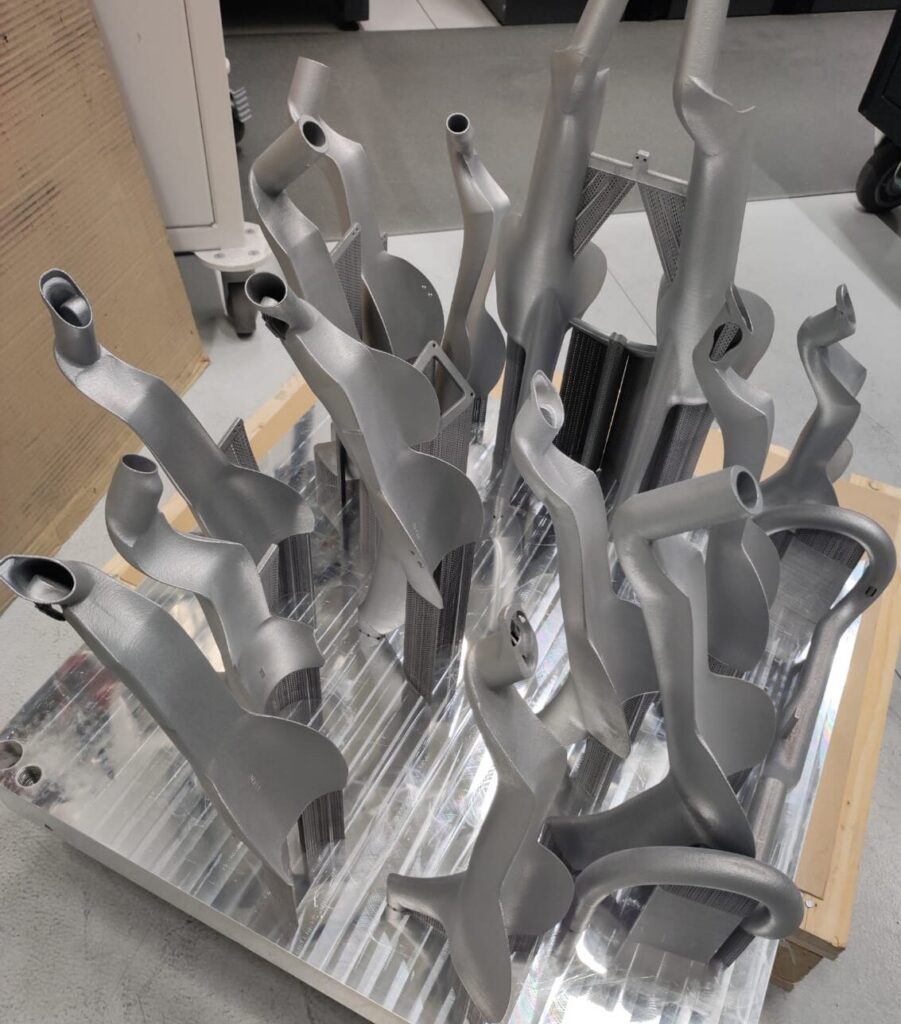
Most of our products are made using SLM printing. In this form of metal printing, every 0,06mm a layer of metal powder is syntered together using a laser.
This method of manufracturing is mainly used in aerospace, sattelites and motorsport since it’s cost is high, the price for each printer ranges from €200.000 to €1.500.000. We have a range of these machines to our disposal for different size builds. We use this production method because of it’s amazing properties for custom work: it’s material properties are super repeatable and thus we can simulate it’s strength for every design we produce. Because we can run these simulations we can optimize the final weight of the product, making them the same weight as the carbon-fiber counterparts we have produced before. Often you can shave off 400g+ over a carbon fiber setup with spacers and adapters.
Simulation protocol
We can garantuee safety of your aerobars, as one of the only in the market.
Before we started public production of our aerobars, we made our first model, this model was simulated over the strongest loads recorded on aerobars (not the ISO norm of 15kg, which is ridiculous). Then we produced the first version and sent it to the lab. In the lab it was tested at a load more than 2x higher than the ISO load, with over 1.000.000 repitions. The standard ISO cycle is 150.000x.
The SLM production of our aerobars is super repeatable, so we have based a simulation protocol of this first model as a benchmark for every model to pass. We keep iterating internal structures until we have found an internal design that is as light as possible, but also passes all safety tests.
3D printed prototypes
After we have received your measurements, we can start on a 3D model for your aerobars. You will first receive 3D renders of this design for verification.
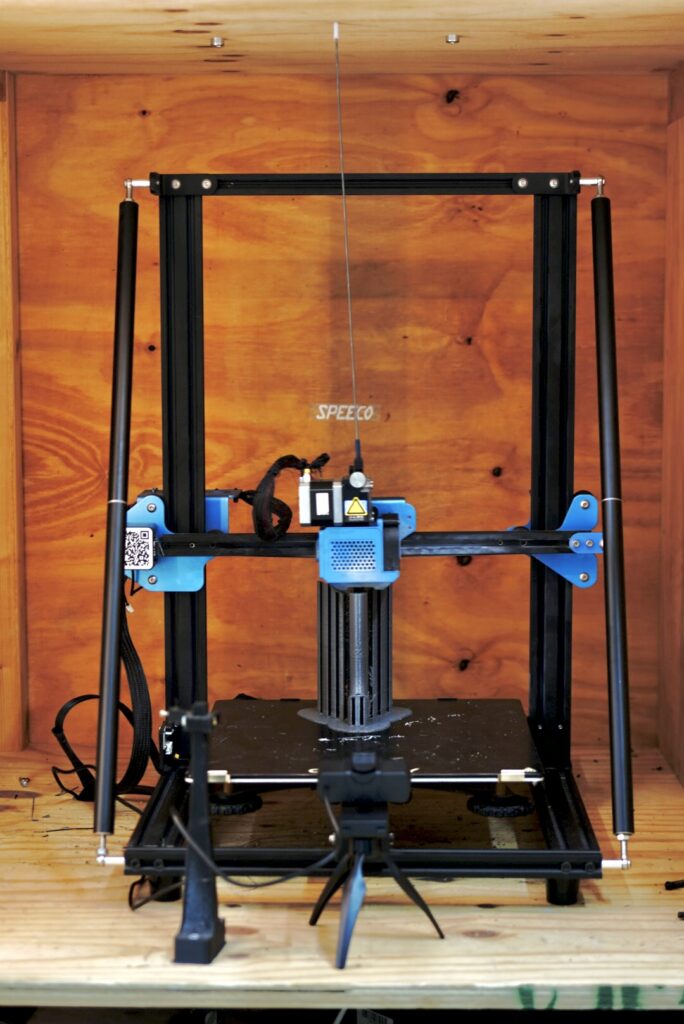
With your go, one of our 3D printers will start running a PETG plastic version of your TTX or TriX bars. These will have the original fitting of the bars, and can be fitted directly on your bars as the final version will. Plastic is only strong enough for prototyping, so please use them only indoors. After an initial stationary trial, you can try to do some turbo sessions on them for further feedback.
TTX-TriX measurements
Our TTX and TriX aerobars are completely available online through our measurement forms.
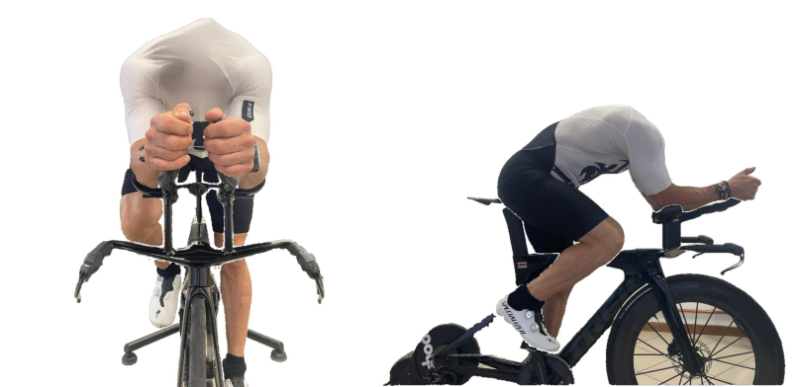
These forms consist of your basic information, order specification, 10 measurements and a front and side picture of your position on the bike.
We use these pictures to trace the angles of your arm, wrist, hand and your handtilt inward, so we can completely support the position you want to have on your bike.